Making space for empathy

The Conversation
Across more than two dozen cities, design leaders gathered around the dinner table to discuss what empathy truly means in leadership today.
There was no agenda. No script. Just open conversation among people who build culture for a living, striving to cultivate environments where everyone feels heard and accepted. Through those conversations, one belief came through clearly: empathy isn’t a buzzword—it’s a practice.
It’s the quiet force that helps teams grow, sharpens decisions, and shapes the spaces where people belong and can do their best work.
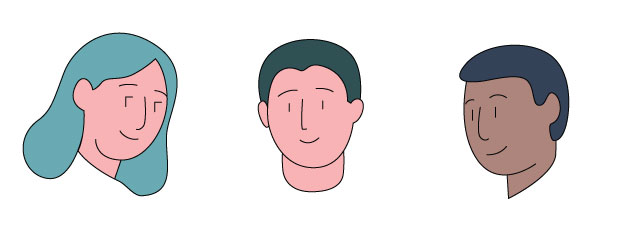
THREE FACES
OF EMPATHY
Leaders often described empathy as “putting yourself in someone else’s shoes.” While this definition is true, it’s incomplete. Empathy shows up in many forms, often layered and overlapping.
In our research and our discussions, we found three lenses leaders can use, depending on the moment:
01
Cognitive Empathy
Perspective-taking—seeing the world through someone else’s eyes. It’s the awareness that the same environment that energizes one person might overwhelm another, or that remote colleagues experience connection differently than those in the room.
02
Emotional Empathy
Emotion-sharing, or feeling what others feel. It’s that tightness in your chest when a team member shares their frustration or disappointment. It builds closeness, but it can also become heavy if you carry too much of it. However, leaders who can grow their emotional intelligence—developing the ability to listen to their peers and have an understanding of their problems—will form a stronger connection and learn how to better support them in the future.
03
Motivational Empathy
Compassion, or the drive to help. It’s what moves us from understanding to action, like stepping in to share the load when someone is struggling to meet a deadline.
NATURE VS
NURTURE
Nature
Some leaders see empathy as a natural trait; others say it’s something they’ve had to learn. The truth lies somewhere in between. Empathy may come more easily to some, but it can absolutely be strengthened, much like a muscle. Simple practices such as asking, “What might this look like from their perspective?” or “What challenge might I be missing?” build the habit of perspective-taking over time.
Nuture
One leader shared that she begins team meetings by asking, “How’s your energy level today?”
Not to make small talk, but to tune in—to see people beyond their roles and read the emotional tone of the group. Empathy is both a skill and a choice. It’s something we can all practice through small, intentional moments: pausing before reacting, asking open-ended questions, staying curious even when we’re tired. “Curiosity is the foundation of empathy.”
The Effort Paradox
When the pressure builds (between deadlines, meetings, fatigue, etc.), empathy is often the first thing to go. Leaders admitted that in those moments, they reach for shortcuts: efficiency over connection.
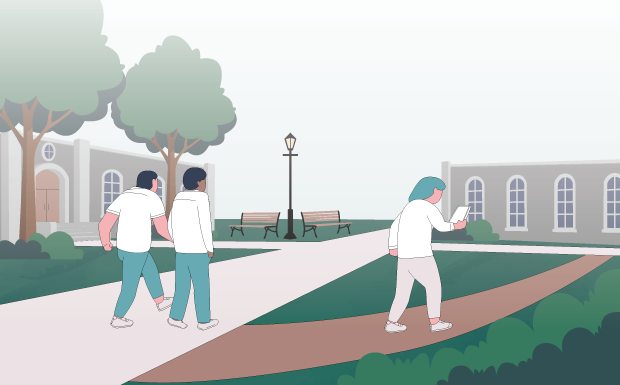
Dr. Inzlicht compares it to the “desired paths” worn across college lawns—those dirt trails that cut corners between paved walkways. We take the easiest route, even when we know they are not designed for connection. Empathy works the same way. It takes effort, so we avoid it. Here’s the paradox: that effort is where meaning lives.
Research shows that - putting effort into something, even just simple, everyday acts makes it more rewarding - ² The more we lean into empathy, the more purpose we find in it. Small rituals—a team check-in, a pause before a hard conversation, a few words of appreciation—lower the lift and make empathy a natural part of how we work. After all, everyone’s needs are different and change day to day, so staying tuned into how everyone is doing will help sharpen a leader’s senses so they can continue to create a space where teams feel safe to share their emotions and be themselves.
CAN TECHNOLOGY TEACH US EMPATHY?
It might sound strange, but AI is revealing something about our own capacity for empathy.
Recent studies show that even when people know they’re talking to a machine, they still feel heard.³
In some cases, responses from AI tools have been rated as warmer and more validating than those from trained professionals.⁴ For leaders, the takeaway isn’t to replace human connection, but to see technology as a mirror. AI can help us prepare for hard conversations, uncover perspectives we’ve missed, or suggest language that helps us connect more clearly.
It’s not the empathy itself—it’s the coach that helps us practice it better.
EMPATHY WITH
BOUNDARIES
Every leader at the table spoke about the growing demand for flexibility, understanding, and real-time support. Managing across generations, cultures, and locations is challenging; it can be exhausting. It’s easy to see these requests as excessive, but most of them reflect basic human needs: autonomy, competence, and connection.
Empathy doesn’t mean saying yes to everything. It means acknowledging the need behind the request—even when the answer has to be no. You can recognize that early meetings are difficult while still expecting attendance. You can validate someone’s anxiety about a deadline without moving it. It’s the difference between understanding and agreeing, between kindness and permissiveness.
As one leader put it, “Clear is kind.”
Boundaries aren’t the opposite of empathy; they’re what make it sustainable. When expectations are clear, people trust the framework they’re working within, and that trust gives leaders the freedom to focus on empathy where it matters most.
LOOKING FORWARD

Empathy doesn’t look the same for everyone
It’s not always soft or sentimental. Sometimes it’s about asking better questions, setting clearer boundaries, or simply taking the time to see someone fully.
While it may take effort, that effort is never wasted
It creates better tools for understanding each individual for who they are and using this knowledge to foster a place where people feel like they belong.
Empathy is only about how we lead
It’s about how we connect, how we build, and how we remind each other that work, at its best, is deeply human.

more insights
making space to belong
10 years after launching Studio TK, alot has changed - the industry, the office, what works when it comes to work. And we’ve changed with it.
On where inspiration comes from
It’s important to remember that social spaces don’t provide intrinsic motivation, they facilitate it. When designing space, here we will outline considerations to support the individual and tap into their intrinsic motivation.